

close
Choose Your Site
Global
Social Media


Views: 0 Author: Site Editor Publish Time: 2026-08-14 Origin: Site


Subsea and offshore cable failures are rarely a question of "if." Instead, they represent a highly predictable mathematical risk driven by extreme environmental hostility. Relentless hydrodynamic stress, high salinity, and intense UV exposure constantly attack these vulnerable assets. The core engineering challenge lies in bridging a massive durability gap in modern subsea infrastructure. We must stretch standard cable manufacturing limits to meet the rigorous 25-plus year lifespans expected across offshore wind, telecom, and oil and gas operations. Without robust defense mechanisms, these vital links degrade rapidly under ocean forces. This article delivers a strictly technical, compliance-aware framework for evaluating and selecting defensive systems. You will learn how to specify the right Marine Cable Protection to prevent catastrophic structural failure. By following this guide, you can confidently protect subsea assets and avoid millions in unscheduled downtime.
Selecting marine cable protection requires balancing hydrodynamic impact resistance with dynamic flexibility (e.g., Bend Restrictors vs. Bend Stiffeners).
Material selection (Polyurethane, HDPE, Metallic, or advanced Heat Shrinks) strictly dictates lifespan; there is no universal material for all depths or splash zones.
Regulatory compliance (ISCPC recommendations) and maritime certifications (DNV, ABS) are non-negotiable baselines for project insurability.
Installation environment (J-tube pulls, monopile transitions, rocky seabeds) dictates the protection system's physical profile and retrofitting capabilities.
Static environments involve traditional seabed laying. Here, power lines and fiber optics face continuous abrasion against rocks. Crushing pressure from rocky backfill poses a severe threat. Furthermore, intense biofouling adds immense unexpected weight over decades. Dynamic sections act very differently. Splash zones, tidal current sweeps, and floating wind dynamic cables endure endless motion. These areas subject internal copper and optical fibers to continuous mechanical fatigue. Identifying these distinct zones determines your engineering approach.
Chemical degradation accelerates rapidly in the ocean. Saltwater corrosion aggressively attacks any exposed metallic armor. Topside platform transitions face intense UV degradation daily. UV rays destroy standard polymers rapidly. At greater depths, extreme hydrostatic pressure threatens to crush internal sealing components. You must map these specific chemical and physical threats accurately. Failing to address local water chemistry leads to premature polymer embrittlement.
Upfront investment in protective systems often seems high to procurement teams. However, under-specifying materials leads to disastrous business impacts. Consider the exponential cost of offshore retrieval operations. Splicing damaged subsea lines requires expensive, specialized cable-laying vessels. Daily charter rates for these vessels reach astronomical figures. Furthermore, daily lost energy production or data transmission revenue easily eclipses the initial hardware savings. Proper specification acts as mandatory operational insurance.
Articulated pipes excel at rocky seabed transitions. They also dominate near-shore surf zones where wave energy peaks. Cast iron variants offer massive blunt impact absorption. Polymer versions trade some ultimate strength for easier vessel handling. You must balance impact absorption needs against strict weight limitations. Heavy cast iron sinks quickly into soft mud. Lighter polymer shells maintain better stability on shifting sandy seabeds.
These two solutions perform distinct mechanical roles. Bend restrictors physically lock into place. They prevent the assembly from exceeding its factory minimum bend radius during sudden impacts. Interlocking elements stop bending completely at a specific angle. Bend stiffeners act quite differently. They add progressive dynamic stiffness under continuous wave load. Stiffeners distribute bending forces smoothly along the entire termination joint. This prevents isolated stress fractures.
System Application Comparison Chart
Solution Category | Primary Function | Ideal Environment | Flexibility Profile |
|---|---|---|---|
Articulated Pipes | Blunt impact absorption | Rocky seabeds, surf zones | Limited, interlocking |
Bend Restrictors | Locking minimum bend radius | Static over-bending risks | Locks at maximum angle |
Bend Stiffeners | Dynamic load distribution | Floating dynamic cables | Progressive flexibility |
Heavy-wall heat shrink tubing provides critical environmental sealing. It effectively prevents moisture ingress at vulnerable splice joints. You should apply it generously for splice and topside connector defense. Advanced adhesives inside the tubing melt and seal micro-gaps. Abrasion sleeves and wraps serve a different purpose. We use them primarily for localized chaffing points. Wraps protect lines rubbing against concrete structures or metal railings.
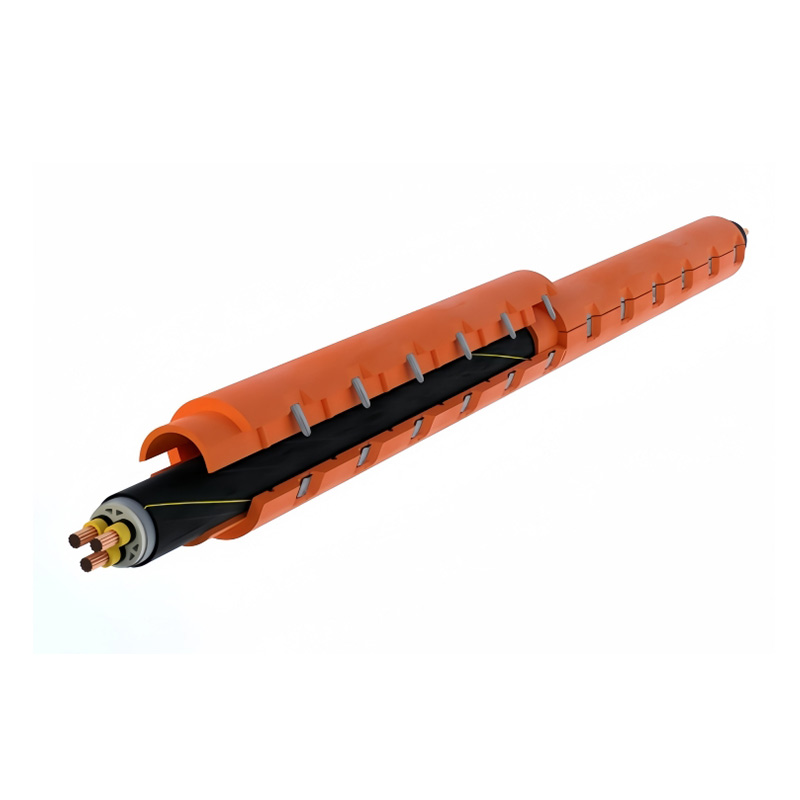
High-Density Polyethylene (HDPE) is highly rigid. It provides excellent impact resistance. HDPE remains incredibly cost-effective for static abrasion defense. Polyurethane (PUR) behaves entirely differently. PUR delivers superior abrasion resistance while maintaining high flexibility. This unique trait makes PUR the ideal choice for dynamic splash zones. Integrating high-quality Marine Cable Protection ensures optimal performance under continuous wave fatigue. Always match the polymer to the anticipated movement profile.
Traditional steel and cast iron solutions remain common industry choices. They withstand massive blunt force trauma from anchors or fishing trawlers. However, you must carefully evaluate their physical realities. Metallic armor requires robust, ongoing cathodic protection. Otherwise, rapid galvanic corrosion destroys the metal. They also impose massive weight penalties during vessel installation. This added weight complicates ROV manipulation procedures immensely.
We must adopt a skeptical engineering framework. No material is entirely immune to aggressive marine biofouling. Barnacles and algae will attach to any untreated surface eventually. Extreme rogue wave events can overwhelm even the toughest polymer. Effective protection simply mitigates mechanical fatigue curves. It extends the functional timeline significantly. However, no product provides absolute invincibility against catastrophic ocean forces. Plan for routine ROV inspections.
The International Cable Protection Committee sets global best practices. Adhering to ISCPC recommendations lowers your operational liability. It standardizes routing protocols and burial methodologies. Compliance ensures your project aligns securely against international maritime expectations. Ignoring these guidelines exposes operators to massive legal risks during cable strike disputes. Courts heavily favor operators following established ISCPC routing parameters.
Third-party classification society approvals are absolutely critical. Project financing typically requires them before releasing funds. Operational insurance policies mandate strict adherence to these standards. DNV and ABS certifications prove long-term reliability. They verify mandatory, highly destructive testing protocols. These evaluations include accelerated thermal aging, multi-axis fatigue cycling, and severe drop-weight impact testing. Uncertified products introduce unacceptable financial risk.
Modern seabed environmental regulations grow increasingly strict globally. You must prioritize non-toxic materials for your deployments. Non-leaching polymers prevent local marine ecosystem contamination. Microplastics and heavy metal leaching draw severe regulatory scrutiny. Comprehensive environmental impact assessments heavily penalize hazardous chemical degradation. Always specify UV-stabilized, marine-grade polymers designed specifically for zero ecological disruption.
Factory-installed protection usually offers seamless integration. Specialized vessels spool these pre-protected lines easily. Brownfield retrofits present much greater difficulty. Applying armor over existing subsea faults demands precise execution. Diver-installed solutions work well in shallow, calm waters. Deep environments require ROV-installable systems. Interlocking split-pipes allow remote vehicles to snap protection onto live lines safely.
The monopile entry point represents the highest-risk zone for wind farms. J-tube pulls exert massive mechanical stress on external jackets. Internal friction forces escalate rapidly here. Extreme pull-in tension realities frequently cause structural failure during installation. Weld seams inside the tube easily slice through unprotected jackets. You must engineer these transitions flawlessly. Centralizers and heavy-duty entry guides mitigate these specific installation risks.
Field execution often introduces fatal errors. Installation crews sometimes ignore thermal expansion coefficients entirely. Polymers expand significantly under direct deck sunlight. Incorrect torqueing of metallic fasteners leads to premature shear failure underwater. Rushing the assembly process compromises the interlocking mechanism integrity. Proper training mitigates these highly preventable field contractor pitfalls. Always mandate vendor-supervised installation for critical transition zones.
Selecting the right defense mechanism requires a systematic approach. Do not rely on basic catalog browsing. Follow this structured matrix to validate your engineering choices.
Site Data Validation: Do you have accurate bathymetric and metocean data? You need exact current speeds, maximum wave heights, and precise seabed composition analysis.
Asset Lifecycle Match: Does the protective system fatigue life match your cable? A 10-year polymer shell cannot defend a 25-year wind farm export line.
Vessel/Installation Compatibility: Can the chosen system pass safely over the lay vessel's tensioners? Oversized restrictors often jam in standard vessel chutes, causing costly delays.
Vendor Engineering Capability: Does the supplier offer bespoke testing? You need site-specific hydrodynamic modeling, not just off-the-shelf, generic catalog parts.
Physical Deployment Specifications
Deployment Zone | Dominant Threat | Recommended Material | Installation Method |
|---|---|---|---|
Topside / Splash Zone | UV Radiation, Wave Fatigue | Polyurethane (PUR) | Pre-installed / Flanged |
Monopile J-Tube | Pull-in Friction, Tension | High-Strength Polymer | Vessel Winch / Centralizers |
Rocky Seabed | Crushing, Abrasion | Cast Iron / Heavy HDPE | Vessel Lay / ROV Retrofit |
Marine cable defense is never a commoditized afterthought. It requires highly specialized structural engineering discipline. The harsh realities of ocean deployment destroy inadequate materials rapidly. You must carefully evaluate dynamic forces, chemical degradation, and complex installation logistics. The best protection system perfectly aligns material chemistry with hydrodynamic reality. This synergy ensures uninterrupted offshore operations for decades. Do not leave your critical subsea assets exposed to predictable failures. We recommend requesting a comprehensive technical consultation today. Download detailed material specification data sheets. Review documented case studies of harsh-environment deployments to inform your next project.
A: The MBR is the smallest radius a cable can safely bend without suffering internal structural damage. Protection systems like bend restrictors artificially lock into a rigid curve. They physically prevent the assembly from breaching its factory MBR during violent dynamic events or vessel installation.
A: Split pipes serve primarily for near-shore, surf-zone, and shallow rocky transitions. Deep-water installations rely more on the line's own internal steel armor and engineered trench burial. ROV-installed split pipes are occasionally used in deep water to cross existing pipelines.
A: Standard industrial plastics fail rapidly in oceans. DNV-certified products undergo rigorous cyclical fatigue testing. They survive immense hydrostatic pressure chambers. Laboratories also subject them to severe saltwater corrosion and accelerated UV aging tests to ensure 25-year marine survivability.
A: Yes. Manufacturers design specific retrofittable split-systems for ROV manipulation. However, ROV installation is much slower than vessel laying. ROVs handle simple snap-together polymer shells well, but heavy cast-iron assembly requires diver intervention in shallow waters.


