

close
Choose Your Site
Global
Social Media


Views: 0 Author: Site Editor Publish Time: 2026-08-10 Origin: Site


Unprotected cables carry massive hidden costs. They invite rapid equipment degradation across your facility. They also create severe workplace liabilities. You risk expensive compliance violations when tripping hazards remain exposed. The market feels completely saturated today. Buyers face everything from cheap consumer plastics to heavy-duty industrial polyurethane. Choosing the right system is a high-stakes decision. Facility managers and IT planners cannot afford mistakes.
This guide strips away the marketing noise. We provide a strictly criteria-based framework. You will learn how to evaluate, shortlist, and implement the right Cable Protector for specific commercial, industrial, and consumer applications. You can use these insights to protect your assets effectively. We will help you navigate material differences, load capacities, and vital safety standards.
Application Dictates Material: Rubber offers flexibility and cost-efficiency for pedestrian areas, while polyurethane is mandatory for high-load, chemical-exposed industrial zones.
Compliance is Not Optional: Public and workplace installations require ADA-compliant slopes and OSHA-recognized high-visibility colors.
Capacity Trumps Channel Count: Evaluating the outer diameter (OD) of your thickest cable against the protector’s channel height is the most critical sizing metric.
Connection Mechanics Matter: T-connectors and dog-bone linkages behave differently under lateral stress during vehicle crossovers.
Many facility managers question the necessity of specialized cable protection. You might wonder if heavy-duty floor covers justify their price tag. Addressing this skepticism requires an objective look at business risks. You must evaluate workplace safety and asset longevity.
Slip-and-trip accidents represent a major financial threat. General occupational safety standards strictly prohibit exposed floor hazards. A single tripping incident can lead to severe employee injury. This triggers medical claims, lost productivity, and potential legal action. OSHA regulations require clean, hazard-free walking surfaces. Failing to cover temporary wiring violates these mandates directly. The fines for negligence often dwarf the cost of premium safety equipment.
Sensitive data lines and heavy-duty power cables cost a premium. Forklifts, pallet jacks, and heavy foot traffic crush these lines easily. Crushed fiber optic cables cause immediate network outages. Broken high-voltage lines create lethal fire hazards. You must contrast the staggering replacement cost of specialized cables against a protective system. A solid protective barrier absorbs crushing impact. It preserves your critical infrastructure seamlessly. This upfront investment prevents catastrophic operational downtime.
Heavy-duty protectors are not universal solutions. Sometimes they represent massive overkill. You do not need industrial polyurethane for standard residential desk setups. A simple cable sleeve or zip-tie loom works perfectly there. Minor cable clutter behind a home theater requires basic organization, not crush resistance. Evaluate your actual environment before spending large budgets. Buy heavy-duty gear only when traffic physically threatens the lines.
Categorizing these solutions relies on physical structure. You must match the architecture to your specific deployment scenario. Proper alignment ensures optimal performance and safety.
Drop-over designs feature an open bottom. You simply place them over existing wires.
Best Application: Use them for temporary setups. They suit light pedestrian traffic and standard office environments perfectly.
Implementation Reality: They allow incredibly fast deployment. However, they lack bottom protection entirely. Do not use them on uneven terrain. They fail in fluid-heavy environments because liquids seep underneath instantly.
These systems feature a sturdy base and a flip-up lid. They house multiple parallel channels inside.
Best Application: Deploy them at event venues, construction sites, and busy industrial floors.
Implementation Reality: They allow precise, isolated cable management. You can add or remove a single wire easily. Be cautious regarding material quality. The hinge represents a common failure point. Cheaper materials snap under repetitive stress.
Low-profile designs blend into the surrounding flooring. They prioritize aesthetics and basic tripping prevention.
Best Application: Install them in indoor offices and high-end retail spaces. They shine where aesthetics matter most.
Implementation Reality: A low-profile cable cover minimizes tripping hazards beautifully. However, it offers virtually no heavy impact resistance. You cannot drive utility carts over them safely.
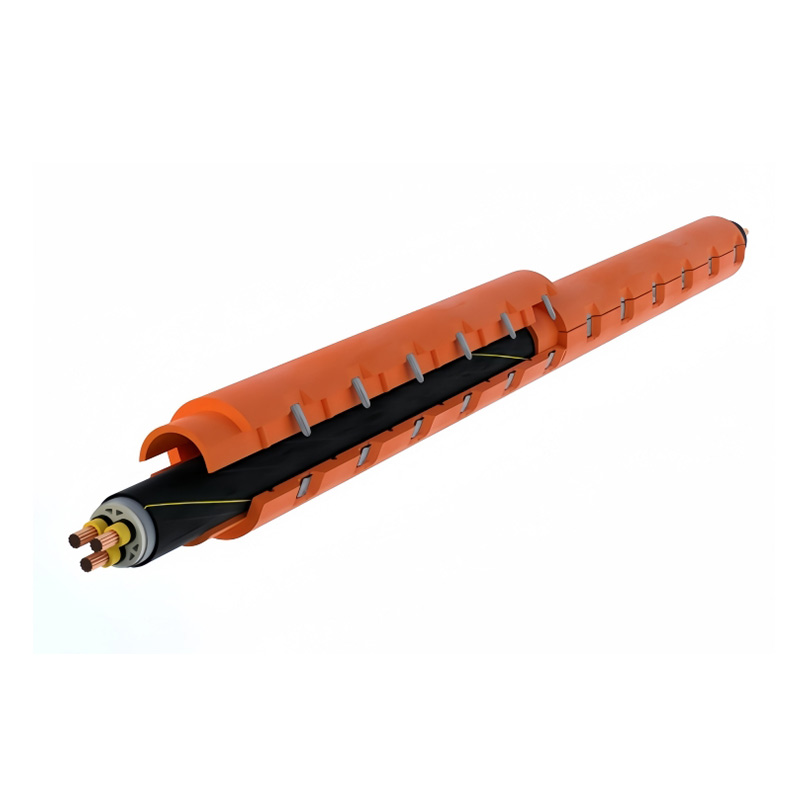
Material dictates performance directly. You must understand technical specifications to make an informed choice. Different environments destroy the wrong materials rapidly. Let us evaluate the three primary compounds used today.
Polyurethane dominates the high-end industrial market. It offers unmatched durability.
Pros: It provides exceptional load-bearing capacity. PU easily handles heavy machinery and forklifts. It resists aggressive oils and chemicals efficiently. PU is also surprisingly lighter to transport than solid rubber.
Cons: It carries a significantly higher upfront cost. Budget-conscious buyers often hesitate here.
Rubber remains a classic staple for cable management. It offers great value for specific applications.
Pros: Rubber delivers excellent grip on smooth surfaces. It proves highly cost-effective for extremely long runs. The material naturally absorbs heavy physical impact.
Cons: It is highly prone to degradation. UV exposure breaks it down over time. Harsh chemical contact melts or distorts rubber. Rubber units are also much heavier to transport.
Rigid plastics cater mostly to light-duty, indoor scenarios.
Pros: PVC is ideal for lightweight, climate-controlled environments. It costs very little.
Cons: PVC displays severe brittleness in freezing temperatures. It offers very poor load dispersal. A single vehicle tire can shatter a PVC unit instantly.
Material Type | Ideal Environment | Load Capacity | Chemical Resistance |
|---|---|---|---|
Polyurethane | Industrial / Heavy Duty | Extremely High | Excellent |
Rubber | Pedestrian / Light Vehicle | Moderate to High | Poor |
PVC / Plastic | Indoor Office / Retail | Low | Moderate |
Making a safe decision requires authoritative knowledge. You cannot guess when dealing with heavy machinery and public safety. You must evaluate load capacities, connection mechanisms, and regulatory guidelines strictly.
Understanding weight ratings prevents catastrophic failure. Manufacturers often list a maximum weight capacity. You must calculate the true load correctly. An overall rating of 10,000 lbs differs drastically from a 10,000 lb rating per axle.
Vehicles distribute their weight unevenly. A forklift might weigh 8,000 lbs total. However, when it lifts a heavy pallet, the front axle bears almost the entire load. If a protector only supports 5,000 lbs per axle, the forklift will crush it. Always evaluate the highest possible axle weight. Never rely on the overall vehicle weight alone.
Modular systems link together for long runs. The connection type matters immensely under stress. Vehicles rarely drive perfectly straight. They turn their wheels while on top of the protector. This action generates massive lateral stress.
Dog-Bone Connectors: These feature rounded, bulbous ends. They handle lateral shifts fairly well. They allow slight pivoting between connected pieces.
T-Connectors: These feature sharp, right-angle locks. They hold tightly but resist pivoting.
Cheaply manufactured connectors snap under lateral stress. Premium models use reinforced polyurethane at the connection joints to prevent this snapping.
Public safety demands strict adherence to federal standards. You cannot simply throw a piece of plastic on the ground.
ADA Accessibility: The Americans with Disabilities Act dictates strict rules. You must provide integrated ramps for wheelchair access. The slope gradients must meet specific ratios (often 1:12). Steep ramps violate ADA laws immediately.
Visual Warnings: OSHA compliance requires distinct color contrasting. Tripping hazards must stand out. You typically see safety yellow or vibrant orange lids paired with black ramps. This contrast alerts pedestrians instantly.
You need an actionable plan to make the right choice. Follow this step-by-step funnel. It guides you to a confident and secure purchase.
Measure the Maximum Cable Diameter: Sizing represents your first critical step. Measure the outer diameter of your absolute thickest cable. Ensure the protector's channel height exceeds this measurement by at least 1/8 inch. This margin prevents dangerous cable pinching when weight applies from above.
Determine the Traffic Type: Classify your specific hazard. Is it strictly pedestrian traffic? Are light utility vehicles crossing? Will heavy machinery like bulldozers or forklifts roll over it? Match the load rating to your heaviest expected traffic.
Assess the Environment: Analyze the physical surroundings carefully. Factor in severe temperature extremes. Polyurethane survives winter; PVC shatters. Consider potential chemical exposure in factories. Evaluate the floor surface type. Rubber grips smooth concrete well, while heavy PU settles better in loose gravel.
Calculate Total Length & Connectors: Measure your intended run length precisely. Do not order exact footage. Always factor in a 2-3% margin of error. Connectors overlap slightly, which consumes overall length. Extra pieces ensure you never fall short during installation.
Pilot Testing: Enterprise rollouts involve high stakes. We recommend a simple test phase. Buy a single cable guard unit first. Test its floor grip in your actual facility. Drive your heaviest expected load over it repeatedly. Verify performance before committing to a massive bulk purchase.
Choosing the right equipment requires careful analysis. It is always a balance of operational requirements, safety compliance, and material durability. You must align your facility needs against these rigid technical specifications. Ignoring these factors leads to wasted money and dangerous conditions.
Over-speccing wastes valuable budget. You do not need expensive polyurethane for a quiet corporate office. Conversely, under-speccing guarantees failure. Buying cheap PVC for a bustling warehouse invites disaster. Align your purchase strictly with your environment.
We encourage you to take action today. Audit your current cable vulnerabilities thoroughly. Measure your exact cable diameters this week. Request a material sample from suppliers, or consult directly with an occupational safety specialist. Proper protection secures your assets and protects your workforce.
A: A sleeve primarily bundles and organizes multiple wires neatly. It prevents tangling but offers minimal impact resistance. A guard physically shields cables against crushing weight. It uses rigid materials to support heavy foot traffic or vehicles.
A: You can utilize integrated rubber grips found on premium models. Applying double-sided industrial tape underneath also provides strong adhesion. Ultimately, the inherent material weight prevents most sliding, especially with heavy-duty polyurethane or rubber units.
A: Most models are modular and temporary. You deploy them as needed. However, you can bolt many industrial units directly into concrete through pre-drilled holes. This transforms them into secure, semi-permanent installations.
A: Yes, if you choose the right material. Polyurethane handles extreme freeze and thaw cycles exceptionally well. It remains durable in snow. Standard PVC becomes highly brittle in cold weather. It will easily crack under pressure when frozen.


