

close
Choose Your Site
Global
Social Media


Views: 0 Author: Site Editor Publish Time: 2026-08-12 Origin: Site


Unprotected temporary wiring on construction sites guarantees two negative outcomes. You risk severe OSHA compliance violations. You also face constant, expensive equipment downtime. Stop leaving vital power lines exposed to daily site hazards. Standard office-grade cable management fails miserably under mechanical stress. Heavy machines like forklifts and telehandlers easily crush weak plastics. Constant weather exposure degrades standard materials quickly. You cannot rely on flimsy solutions when navigating rugged terrain and heavy industrial workloads. This guide provides safety managers and procurement teams a precise evaluation framework. We will help you evaluate and select industrial-grade protection confidently. You will learn to specify the ideal gear based on load limits, site terrain, and strict compliance requirements. Read on to master job site safety and secure your temporary utility lines today.
Match load ratings to axle weight, not total vehicle weight, to prevent crushing.
Multi-channel, hinged-lid protectors offer the most scalable solution for evolving site power needs.
Polyurethane construction generally outperforms traditional rubber in chemical resistance, weight reduction, and UV durability.
Compliance isn't just about covering wires; it requires high-visibility colors and, in public-facing zones, ADA-compliant accessibility.
Compliance and liability issues represent massive financial risks for any general contractor. OSHA standard 1926.405(a)(2)(ii)(B) explicitly requires protecting temporary cables from accidental damage. Site inspectors actively look for exposed cords traversing roadways or pedestrian paths. Violating this safety standard triggers immediate citations and heavy fines. It also exposes your company to severe liability. If a worker trips over a loose cord or suffers electrocution, the resulting lawsuits dwarf the cost of proper safety equipment.
Operational downtime drains project budgets much faster than regulatory fines. Consider the immediate impact of a severed power line on a high-velocity construction site. Halting a massive concrete pour because a skid steer crushed the vibrator's power feed ruins expensive materials. Stopping a tower crane due to severed control data lines brings the entire project timeline to a standstill. You lose thousands of dollars every hour crews stand idle.
Equipment attrition adds another frustrating layer of financial waste. Repeatedly replacing crushed electrical cables consumes project contingency funds. Electricians waste highly paid labor hours splicing damaged temporary feeders instead of advancing the permanent build. Investing in a dedicated heavy-duty Cable Protector eliminates this recurring expense immediately. You protect your essential assets and keep crews working uninterrupted through challenging phases.
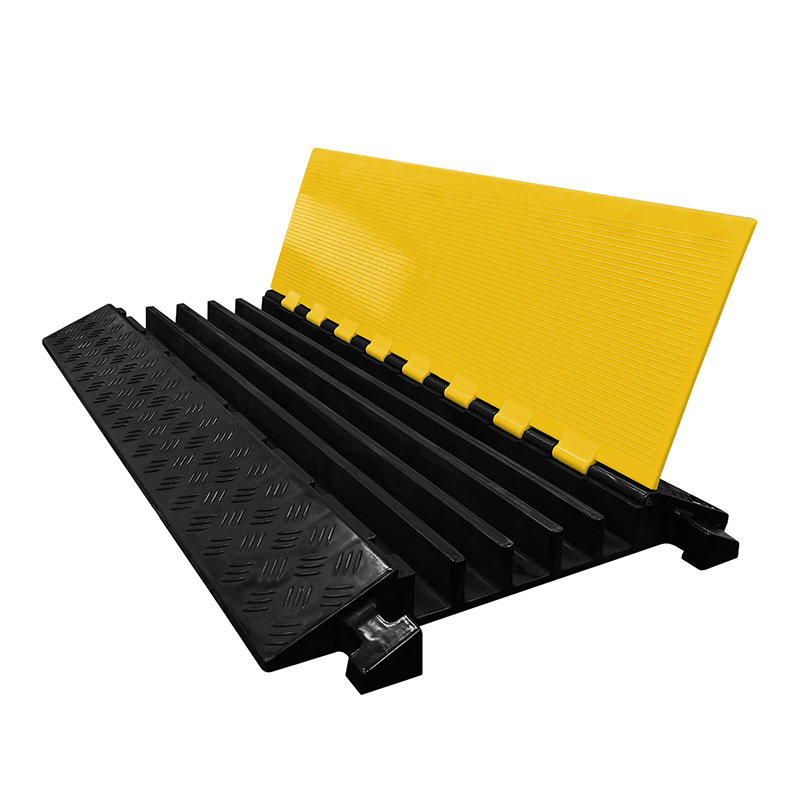
Selecting the right protective gear depends entirely on your specific site conditions. Different construction phases demand completely different hardware profiles. You must match the equipment to the environment.
You need maximum durability for main access roads and heavy machinery crossing points. Heavy-duty options feature rugged hinged lids and interlocking dog-bone connectors. They typically offer three to five channel designs. This intelligent layout completely separates high-voltage electrical lines from sensitive data cables.
Heavy equipment traffic demands uncompromising structural integrity. These industrial units support extreme dynamic axle loads from heavy haulers. However, they carry a high upfront cost. Site workers also find them quite heavy to deploy. You must balance the physical deployment effort against the massive safety benefits they provide for main thoroughfares.
Fast-moving temporary setups require highly agile solutions. Pedestrian zones and low-profile indoor applications benefit greatly from a drop-over cable cover. These models feature a simple open-bottom design. They are extremely lightweight and highly portable. Crews can deploy them across a busy hallway in mere seconds.
You simply place the unit directly over the existing wire run. This action prevents tripping hazards instantly. However, they are strictly unsuitable for uneven outdoor terrain. Heavy-axle vehicle traffic will easily crush an open-bottom design into the dirt. Restrict their use exclusively to foot traffic and light pushcarts.
Site offices and indoor finishing phases present unique spatial challenges. You need to manage scattered light cords without creating bulky floor obstacles. A flexible cable sleeve fits this sterile environment perfectly.
Manufacturers use woven fabrics or very thin, flexible rubber construction. These low-profile options prevent trip hazards rather than heavy crush hazards. They bundle messy wires neatly across office floors. Keep in mind they offer zero heavy equipment protection. Never use them outdoors or anywhere vehicles operate.
Do not guess your hardware specifications. Use this rigid technical framework to evaluate every potential safety purchase for your job site.
Static load capacity and dynamic axle load represent two entirely different engineering metrics. Static load refers to weight resting gently on a flat surface. Dynamic axle load measures the intense, moving pressure of rolling wheels. A forklift carrying steel beams exerts immense, concentrated downward force purely on its front axle.
Always evaluate the dynamic axle rating when reviewing specification sheets. We recommend establishing strict baseline thresholds for industrial sites. Require a minimum of 20,000 lbs per axle for standard equipment zones. Increase this specification to 40,000+ lbs for main routes handling articulated haul trucks or mobile cranes.
Your utility wires must fit comfortably inside the internal housing. Pinching a high-voltage wire causes dangerous heat buildup. Engineers call this ampacity derating. Follow a strict rule of thumb to prevent fires. The channel must be at least 0.25 inches larger than the maximum cable outer diameter.
This extra space allows necessary thermal heat dissipation. It also accommodates minor debris ingress. You must carefully account for fluid hoses running alongside electrical lines. Always place pneumatic air lines or water hoses in completely separate channels. This physical barrier prevents catastrophic short circuits if a high-pressure fluid hose bursts.
Modular interlocking pieces must stay firmly connected under extreme mechanical stress. Evaluate connector styles carefully before purchasing. Dog-bone connectors provide excellent horizontal tensile strength. T-connectors offer rapid assembly features. Interlocking pins provide rigid vertical alignment.
Assess connector failure risks based on your specific terrain. Shifting heavy loads on muddy terrain actively pry weak connectors apart. Dog-bone designs generally resist lateral separation best. Make sure workers consistently clear mud out of the connection points before joining heavy sections together.
Material science dictates field performance. You generally must choose between advanced polyurethane polymers and traditional vulcanized rubber.
Performance Feature | Polyurethane Construction | Vulcanized Rubber Construction |
|---|---|---|
Deployment Weight | Significantly lighter. Reduces worker fatigue and speeds up deployment. | Heavy and cumbersome. Harder to position and transport manually. |
Load-Bearing Capacity | Extremely high resistance to crushing. Supports heavy dynamic loads. | Moderate to high. Compresses slightly under extreme heavy wheel loads. |
Chemical Resistance | Highly resistant to motor oil, diesel, and harsh hydraulic fluids. | Absorbs certain industrial chemicals, leading to rapid breakdown. |
Durability vs UV | Excellent long-term UV stability. Resists sun fading and cracking. | Degrades, stiffens, and cracks under continuous severe UV exposure. |
Recommended Application | Heavy civil, commercial, and long-term reusable industrial projects. | Temporary, cost-sensitive, light-duty indoor or short-term setups. |
Polyurethane offers distinct operational advantages on demanding sites. It features a noticeably lighter deployment weight. This speeds up daily setup times and heavily reduces back injuries among crews. Polyurethane delivers exceptional load-bearing capacity as a robust thermosetting polymer. It remains highly resistant to motor oil, diesel fuel, and leaking hydraulic fluids. It requires a higher upfront investment but provides vastly superior durability.
Vulcanized rubber serves a different, more localized purpose. It remains highly cost-effective for tight project budgets. Rubber naturally grips smooth floor surfaces better, preventing unwanted sliding on freshly finished concrete. However, rubber degrades noticeably faster under continuous outdoor UV exposure. Unplanned chemical spills also soften the rubber material rapidly. We strongly recommend defaulting to polyurethane for heavy civil sites. Reserve rubber for temporary, light-duty indoor applications.
Deploying equipment incorrectly negates all built-in safety benefits. You must address chaotic field conditions directly.
Thermal expansion causes major interlocking alignment issues. Extreme seasonal weather forces polyurethane and rubber materials to expand and contract. Leaving slight slack in the cord line prevents aggressive snapping. Never pull temporary cables perfectly taut before closing the hinged lids. The protective housing will shift slightly throughout the day as temperatures fluctuate wildly.
Terrain challenges complicate outdoor installations immensely. Navigating deep mud, loose gravel, and uneven grades completely compromises the interlocking system. A rigid cable guard often bridges empty gaps over hidden potholes. When a heavy wheel strikes this unsupported bridge, the center bends deeply, ripping the connectors apart. Crews must manually grade the crossing points flat before deployment.
Visibility and ADA compliance remain critical municipal requirements. Ensure trip hazards are heavily mitigated using high-visibility yellow or bright orange lids. Sharp visual contrast prevents accidents in low-light morning conditions. You must specify gentle ADA ramps where site boundaries meet active public walkways. Blocking a public sidewalk with an un-ramped barrier triggers immediate municipal fines and accessibility lawsuits.
Procuring the right safety gear requires a highly systematic approach. Random purchasing leads to incompatible, frustrating site equipment.
Conduct a comprehensive site audit first. Map all planned temporary crossing points carefully. Identify the absolute heaviest vehicle that will traverse the protected line. Find out if tracked excavators or massive wheeled loaders will cross the path regularly. This thorough audit forms your baseline engineering specification.
Standardization across the site is incredibly important. Stick rigidly to one manufacturer and one specific connector style across the entire project. Mixing diverse brands guarantees components cannot link together safely. You need seamless modularity to adapt to constantly changing site layouts.
Establish strict technical vendor requirements. Demand verifiable load-testing certificates before issuing large purchase orders. Review exact warranty terms for structural failure carefully. Reputable safety manufacturers gladly provide certified third-party testing data. Ignore vendors who refuse to supply documented engineering ratings.
An industrial-grade housing solution is a lasting organizational asset, not a cheap disposable consumable. Treating temporary wire management as a casual afterthought guarantees expensive downtime and severe safety liabilities. Implement a strict evaluation framework based entirely on dynamic axle loads and brutal environmental realities.
Match the internal channel size meticulously to your specific utility lines to prevent dangerous heat buildup. Require high-visibility lids and mandate strict ADA compliance in all public-facing zones. Standardize your procurement strictly around proven polyurethane designs for heavy traffic environments. Always mandate verified load testing documents from your safety suppliers.
As a final best practice, intentionally over-spec the load rating by 20 percent. This critical safety margin accounts for unexpected heavy machinery deliveries or sudden site layout changes. Protect your vital utilities proactively to keep your projects running safely, efficiently, and fully compliant.
A: Divide the gross weight of the heaviest equipment by its total number of axles. Always specify safety protectors rated significantly higher than this localized weight. You must account for dynamic forces during movement, which exert far more intense pressure than static standing weight.
A: Yes, provided they are placed in completely separate, isolated channels within a multi-channel unit. This physical separation prevents catastrophic short circuits if a pressurized water or pneumatic hose bursts unexpectedly right next to high-voltage lines.
A: Generally, no. Drop-over designs exist primarily for pedestrian trip-hazard mitigation and light push carts. They lack a solid structural bottom. Heavy vehicle tires will easily crush the open structure. Heavy vehicles strictly require solid-bottom, multi-channel protective solutions.
A: Anytime temporary power lines cross a public sidewalk, public right-of-way, or a designated accessible route within the finished site footprint. Municipalities actively enforce this rule to ensure safe, uninterrupted wheelchair and walker access around your active construction boundary.


