

close
Choose Your Site
Global
Social Media


Views: 0 Author: Site Editor Publish Time: 2026-10-27 Origin: Site


Unexpected conveyor downtime remains a massive financial drain in modern warehouses and manufacturing plants. When a material handling system halts, the financial impact extends far beyond delayed shipments. It aggressively eats into labor allocation, spikes energy consumption, and bottlenecks overall facility productivity. At the core of these intricate automated systems lies a critical component that often dictates system reliability. That component is the conveyor drive roller.
Historically, standard materials like rubber or bare steel served this purpose. However, today's relentless industrial demands require far more resilient solutions. Upgrading to advanced elastomeric components is increasingly recognized as a highly effective method to streamline operations. By offering enhanced durability and optimal friction, these robust parts reduce maintenance intervals and dramatically boost overall throughput.
Key Takeaways:
Maximized Uptime: Polyurethane offers exceptional wear and abrasion resistance. This significantly reduces the frequency of system downtime due to component failure.
Superior Traction: High-friction properties prevent belt slippage. This ensures smooth, consistent, and efficient power transmission from the motor to the belt.
Versatility in Design: Components can be customized across various durometers to accommodate specific load capacities and harsh environmental conditions.
Lower Total Cost of Ownership: While the initial acquisition cost may be higher than traditional rubber, advanced polymers deliver a substantially higher return on investment through extended longevity.
Recent industry data reveals a massive shift in warehouse logistics and automated sorting. As global e-commerce volumes skyrocket, facilities are pushing cross-belt sorters and merge conveyors to run continuously at unprecedented speeds. This relentless pace has exposed the fatal flaw in legacy materials. Reactive maintenance is no longer a viable strategy for profitable operations.
Consequently, the material handling sector is rapidly moving toward predictive reliability and hyper-automation. Engineering teams are phasing out standard rubber cylinders that require frequent swaps. Instead, the focus is squarely on installing high-endurance polymer parts. These modern upgrades prevent micro-stoppages, align with strict energy conservation goals, and handle the high-torque demands of modern smart-sorting algorithms.
To truly understand how we achieve material handling efficiency, we must examine the mechanical components involved. A drive roller acts as the motorized cylinder that actively propels a conveyor belt forward. When cast with a premium polymer, engineers specifically design it to withstand extreme mechanical stress.
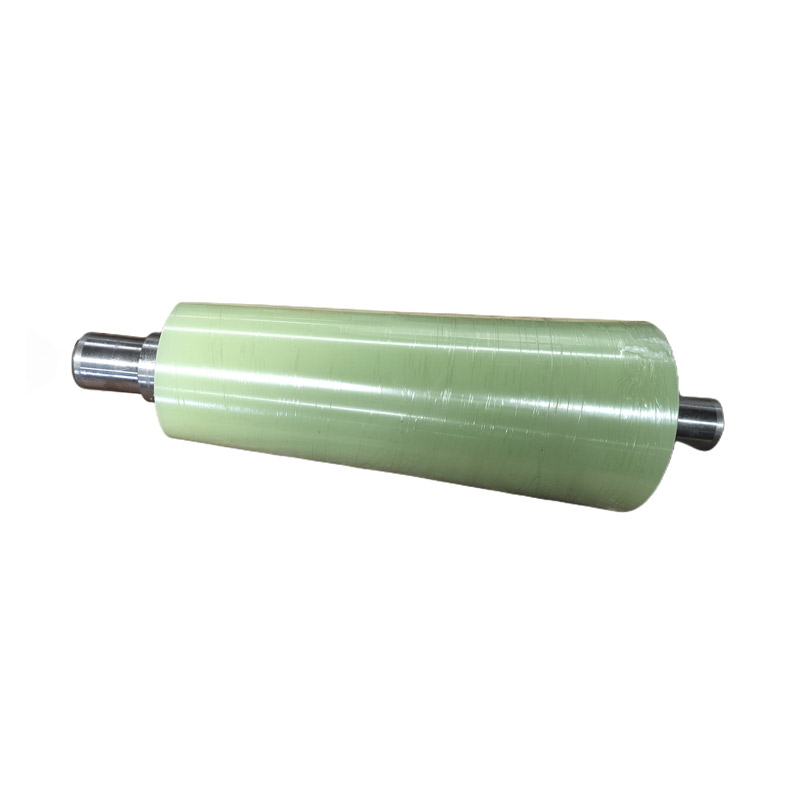
A standard industrial drive roller consists of two primary parts. The first is a rigid internal core, and the second is an external elastomeric layer. We typically machine the core from high-strength Q235 carbon steel, 304 stainless steel, or lightweight aluminum. This metallic foundation provides the structural integrity required to support massive radial loads without deflecting. The outer layer is cast from polyurethane. This highly versatile polymer beautifully bridges the gap between the flexibility of rubber and the unyielding toughness of hard plastic.
During the manufacturing process, liquid polyurethane is chemically bonded to the metal core using specialized adhesives and precise thermal curing processes. This meticulous bonding ensures the material will not delaminate, shear, or peel away from the metal under high-torque conditions. Once cured, the cylinder connects to a drive motor, translating rotational force into linear belt movement.
Facility managers often encounter two distinct variations when sourcing replacements. Some low-load, lightweight applications use wheels cast entirely from solid plastic. However, heavy industrial material handling relies almost exclusively on a custom PU coated drive roller.
A solid urethane wheel lacks the tensile strength to handle heavy pallets or bulk aggregates without warping. In contrast, a coated cylinder leverages the unyielding strength of a metal core alongside the resilient, high-friction surface of the polymer. This hybrid construction remains the undisputed industry standard for heavy-duty sorting environments.
Before evaluating the performance benefits of polymer upgrades, operations managers must first assess the baseline financial drains generated by sub-optimal conveyor components.
Standard rubber cylinders are highly susceptible to both environmental and mechanical degradation. Over time, continuous friction causes traditional rubber to wear down unevenly. This leads to a severe loss of dimensional tolerance. Furthermore, rubber is prone to chunking. This is a destructive process where small pieces of the surface literally tear away due to sharp impacts or heavy localized loads. As the surface degrades and glazes over, the component loses its vital grip on the conveyor belt.
Picture a high-volume cross-belt sorter during peak holiday fulfillment. When a drive cylinder fails to maintain traction, the resulting belt slippage creates a disastrous domino effect. Belt tracking issues immediately arise, causing the fabric to drift off-center. This wandering frays the edges of the belt and can severely damage conveyed products.
To compensate for this slipping, drive motors must draw significantly more electrical current to maintain the programmed speed. This leads to inflated energy consumption and premature motor burnout. Ultimately, these compounding mechanical inefficiencies translate into missed fulfillment deadlines and bloated emergency maintenance budgets.
Transitioning from legacy materials to advanced polymers is a strategic engineering decision backed by empirical performance data. The unique chemical structure of this elastomeric material provides several objective advantages.
Efficiency in automated transit relies entirely on the precise transfer of power. A premium polyurethane drive roller possesses a naturally high coefficient of friction against standard PVC or fabric belts. This exceptional grip ensures that the rotational energy from the motor transfers with near-zero energy loss.
By effectively eliminating slippage, the conveyor operates at its exact engineered speed. This consistency is absolutely critical in modern assembly lines where automated barcode scanning and robotic sorting require precise timing.
Industrial logistics often involves transporting massive automotive parts or heavy pallets. Traditional rubber compresses and permanently deforms under continuous heavy weight. Engineers refer to this phenomenon as compression set. This deformation increases rolling resistance, forcing the entire system to work harder.
Polyurethane exhibits remarkable elastomeric memory and load-bearing capacity. It can support significantly heavier loads and immediately spring back to its original cylindrical shape once the weight passes. This structural stability minimizes rolling resistance, thereby reducing mechanical strain on the motor.
Occupational safety regulations place strict limits on ambient noise levels in manufacturing zones. High-speed systems utilizing bare steel rollers generate excessive metal-on-fabric noise. The polymer coating acts as a phenomenal acoustic dampener. It actively absorbs the kinetic energy and micro-vibrations generated by the moving belt, significantly lowering the decibel output of the entire line.
Logistics equipment frequently faces brutal environmental factors. Rubber swells, softens, and deteriorates rapidly when exposed to industrial oils, greases, and cleaning solvents. Polyurethane is chemically synthesized to resist these aggressive substances. It maintains structural integrity and friction properties even in environments subject to high-pressure chemical wash-downs.
To justify the procurement of upgraded components, purchasing managers rely on comparative data. Objective testing consistently demonstrates the superiority of advanced polymers in demanding drive applications.
Performance Metric | Polyurethane Coated | Standard Rubber | Bare Steel |
|---|---|---|---|
Lifespan & Wear Resistance | Excellent up to 5x longer | Low prone to chunking | High but damages belts |
Surface Traction Grip | Very High zero slippage | Moderate glazes over time | Very Low requires high tension |
Load Bearing Capacity | High no compression set | Low deforms under weight | Extreme |
Total Cost of Ownership | Lowest due to uptime | High frequent replacement | Moderate belt wear costs |
The highly adaptable nature of this material makes it the component of choice across a diverse array of demanding sectors. As automation scales, the reliance on these durable parts has never been higher.
In modern fulfillment centers, cross-belt sorters operate around the clock at blistering speeds. The primary requirement here is continuous, uninterrupted uptime. In these high-stakes environments, a polyurethane drive roller delivers flawless performance by preventing belt slippage during rapid start-and-stop sequences. This ensures parcels route with absolute precision.
Heavy manufacturing requires components that can withstand immense, concentrated weight. The exceptional cut resistance and load-bearing capacity prevent roller deformation. This guarantees heavy steel skids or engine blocks glide smoothly down the assembly line without stalling the machinery.
Procuring the correct replacement part requires far more than simply requesting a plastic roller. To truly maximize efficiency, you must meticulously engineer the component to match the exact specifications of your facility framework.
We measure the hardness of the material on the Shore A scale. Selecting the correct rating is the most critical step in the specification process.
Specifically, softer formulations ranging from 60A to 75A provide the highest coefficient of friction. This rating is ideal for steep incline conveyors or applications requiring delicate product handling. Medium formulations between 80A and 90A serve as the industry standard. They offer an optimal balance of traction and wear resistance for general logistics. Hard formulations at 95A and above are highly rigid. Engineers specify these for extreme heavy-duty environments where load-bearing takes priority over maximum surface grip.
Beyond hardness, physical dimensions must be perfectly precise. The outer diameter determines the conveyor speed relative to the motor RPM. Even a slight deviation of a few millimeters can throw a synchronized sorting system entirely out of alignment. Additionally, engineers can request custom surface geometries. Manufacturers can machine V-grooves for tracking guides or apply specific tread patterns known as lagging. This channeling moves water and dust away from the contact zone, further enhancing grip in wet conditions.
While premium elastomeric parts require far less maintenance than legacy materials, implementing a proactive inspection protocol ensures maximum return on your investment.
Maintenance technicians should conduct regular visual and auditory walk-throughs. Key indicators to monitor include surface glazing. This occurs when dust and continuous friction cause the surface to become overly smooth, slightly reducing traction. Technicians should also check for uneven tapering across the cylinder, which usually indicates underlying belt tracking misalignment. Finally, grinding noises typically point to internal bearing failure rather than a breakdown of the coating itself.
One of the most significant financial advantages of these components is their recyclability. When the outer layer eventually wears down after years of service, you do not need to scrap the entire unit. Specialized manufacturers can strip the old polymer, sandblast the pristine metal core, and cast a brand-new layer. This recoating process restores the part to exact factory specifications at a fraction of the cost of manufacturing a new unit from scratch.
Upgrading your facility core mechanical components is a strategic investment in long-term material handling efficiency. By replacing outdated rubber and steel with advanced polymers, operations managers drastically reduce costly unexpected downtime and lower annual maintenance expenses. These components offer superior grip, unmatched load-bearing capabilities, and the resilience needed to survive harsh industrial environments. Evaluate your current conveyor lines today to identify high-friction zones ripe for improvement. When you are ready to eliminate belt slippage and boost throughput, exploring custom solutions from trusted manufacturers like Jiunaipu ensures your components match your exact operational demands perfectly.
The exact lifespan depends heavily on the specific application, load weight, and operating environment. However, under identical industrial conditions, these components generally last three to five times longer than standard rubber alternatives due to their superior abrasion and tear resistance.
Yes, they are highly interchangeable. Facility engineers can typically utilize the exact same core dimensions, shaft specifications, and bearing housings. You are simply upgrading the outer contact material from rubber to a high-performance polymer to achieve better traction and longevity.
The ideal hardness varies by specific use case. A rating of 70A to 85A is standard for general logistics and warehouse sorting where grip is essential. Conversely, a harder 90A to 95A formulation is preferred for heavy manufacturing where extreme load-bearing capacity and cut resistance are the primary requirements.
Belt slippage usually occurs due to a lack of surface friction, improper belt tension, or surface contamination. Legacy rubber rollers often glaze over time, losing their grip. Upgrading to a polymer coating with a high coefficient of friction or adding custom lagging patterns will effectively eliminate this slippage.
To ensure a perfect fit, you must measure three critical dimensions. First, measure the exact outer diameter of the cylinder. Next, measure the face length, which is the coated section where the belt rides. Finally, measure the overall shaft length and the shaft diameter to ensure it fits perfectly into your existing bearing housings.
Yes, the material is naturally resistant to a wide array of harsh substances, including petroleum-based oils, industrial greases, and mild cleaning solvents. This chemical stability makes it an excellent choice for challenging processing environments where traditional rubber would quickly swell and degrade.
Absolutely. Recoating is a standard, highly cost-effective, and environmentally friendly maintenance practice. Industrial manufacturers safely strip the worn material from your existing metal core and chemically bond a fresh polymer layer, fully restoring the component to like-new condition.


